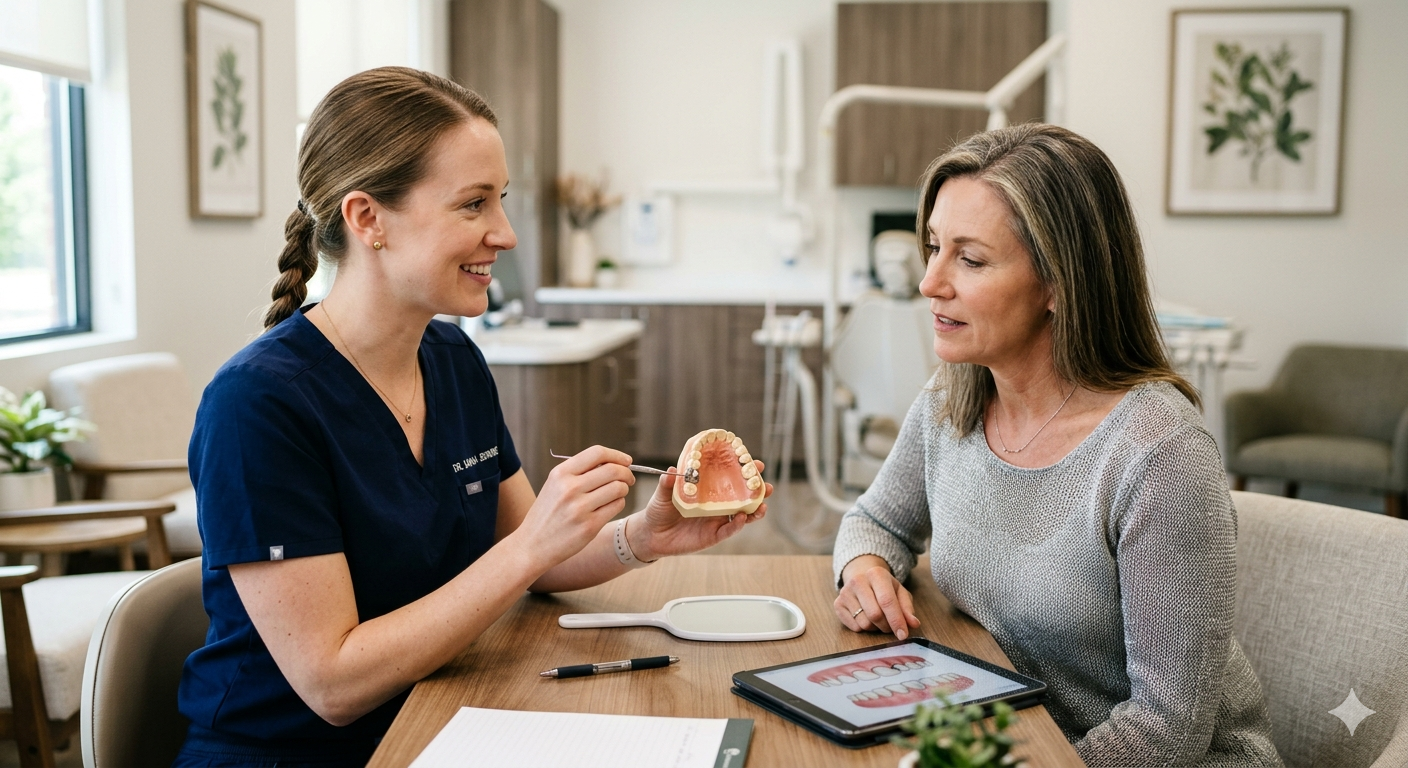
Quick Answer: You can often tell your child may need orthodontic treatment by crowded, gapped, or protruding teeth, bite problems, trouble chewing or speaking, or habits like prolonged thumb sucking. Because some problems aren’t visible at home, the American Association of Orthodontists recommends a first orthodontic check-up no later than age 7. Maple Dental in Belleville, NJ can evaluate your child and explain what comes next.
Most parents notice the obvious things first, like a crooked front tooth or a gap that seems to be growing. But many bite and jaw problems are subtle, and they can develop quietly while a child still has baby teeth. Knowing what to look for helps you decide when to ask for a closer look, and when it’s fine to simply keep watching.
Visible Signs in Your Child’s Teeth
Some orthodontic concerns can be spotted just by looking. Keep an eye out for:
- Crowded, overlapping, or twisted teeth
- Gaps or extra space between teeth
- Teeth that stick out noticeably
- Baby teeth that fall out much earlier or later than expected
- Extra or missing teeth
Crowding deserves special attention. Teeth that overlap are harder to brush and floss, which can raise the risk of cavities and fillings down the road.
Bite and Jaw Signs Worth Noticing
Not every orthodontic issue shows up in a smile. Some only appear when your child bites, chews, or talks:
- Trouble biting into or chewing certain foods
- Upper and lower teeth that don’t meet evenly, such as an overbite, underbite, or crossbite
- A jaw that shifts to one side when closing
- Frequently biting the cheek or tongue
- Difficulty pronouncing certain sounds
If you notice any of these, mention them at your child’s next dental visit.
Habits That Can Affect Tooth Position
Some everyday habits can influence how teeth and jaws develop over time. Thumb or finger sucking and pacifier use are normal in toddlers, and most children outgrow them on their own. When they continue well past the early years, they can push teeth out of position. Mouth breathing and pressing the tongue against the teeth can have a similar effect, so they’re worth pointing out to your dentist too.
Why an Early Check-Up Helps
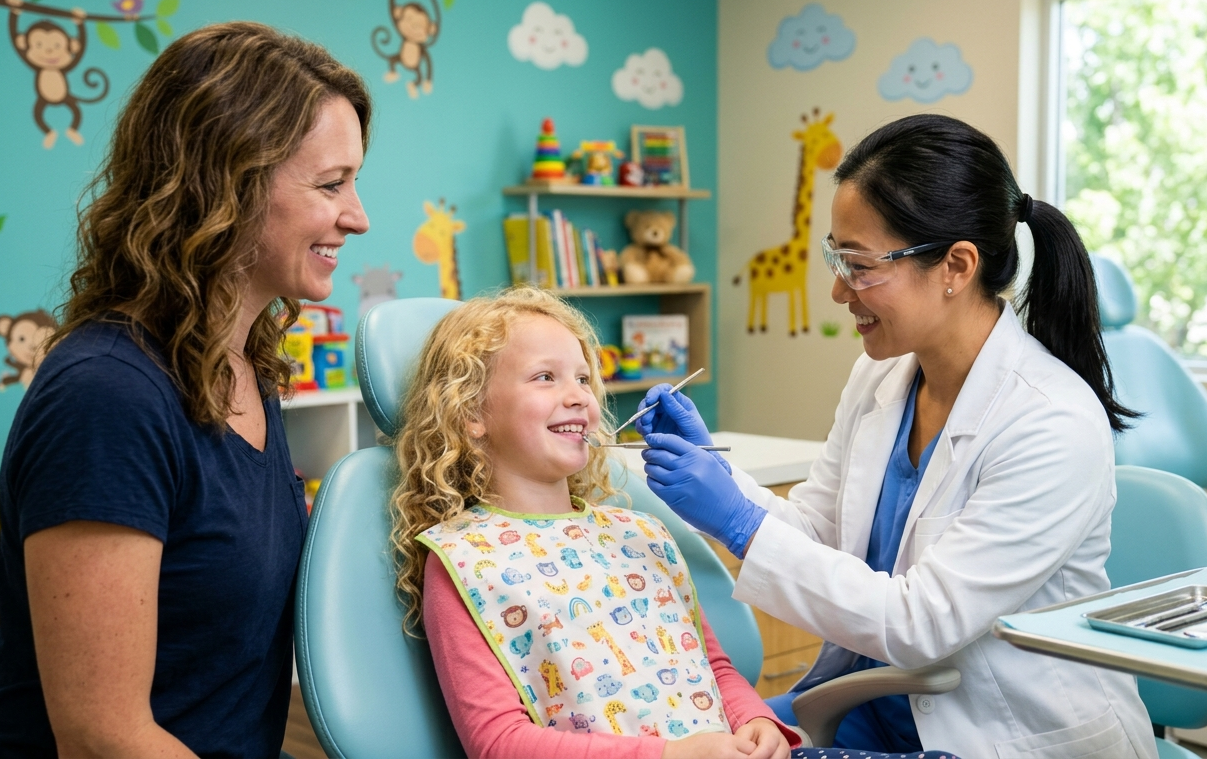
According to the American Association of Orthodontists, a child’s first orthodontic check-up should happen when a problem is first recognized, and no later than age 7. By then, a mix of baby and permanent teeth gives an orthodontic professional enough to evaluate how the teeth and jaws are developing, including problems a parent can’t see.
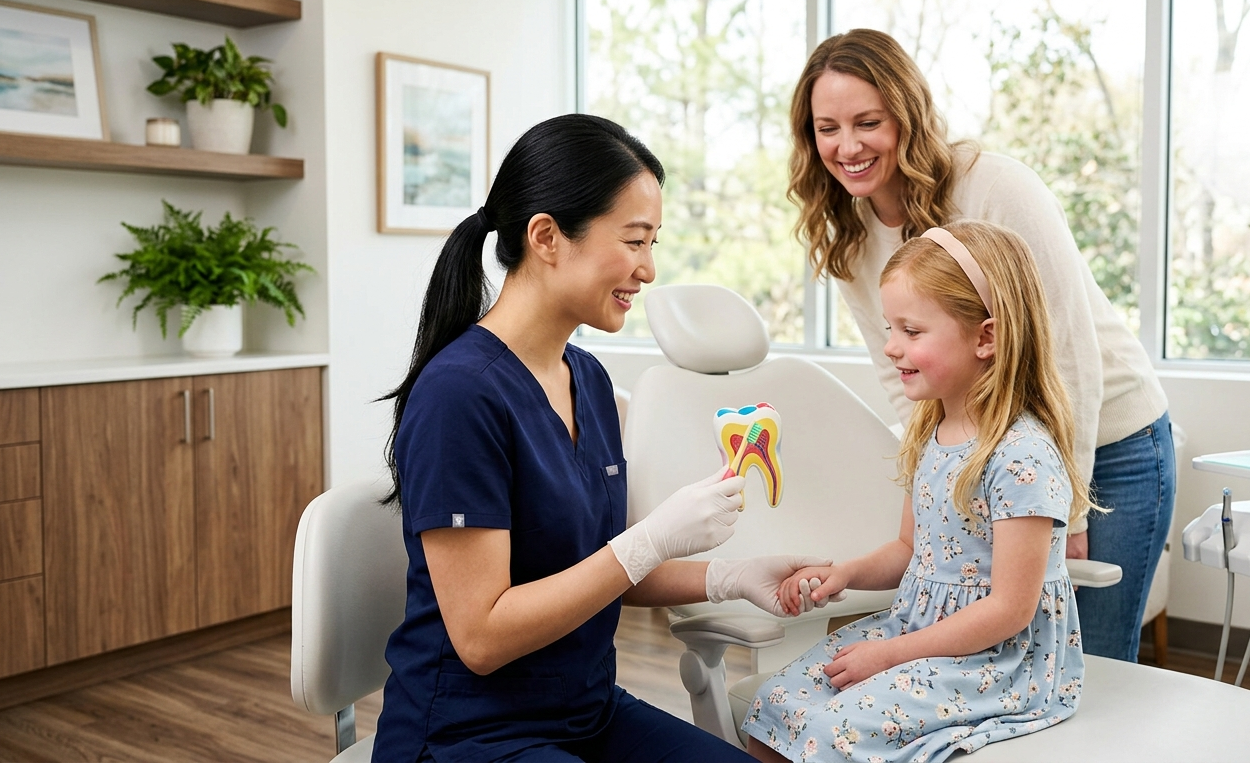
An early visit doesn’t mean braces are coming. Often the outcome is that no treatment is needed and the dentist simply monitors growth. When a problem does lend itself to early treatment, the goals are to guide jaw growth, correct a developing issue, and make room for incoming permanent teeth. Many problems are still best treated once all the permanent teeth have arrived.
What Happens at a First Evaluation
If you’ve been searching “braces near me”, it helps to know what a first visit usually involves:
- A review of your child’s dental history and concerns.
- An exam of the teeth, bite, and jaw.
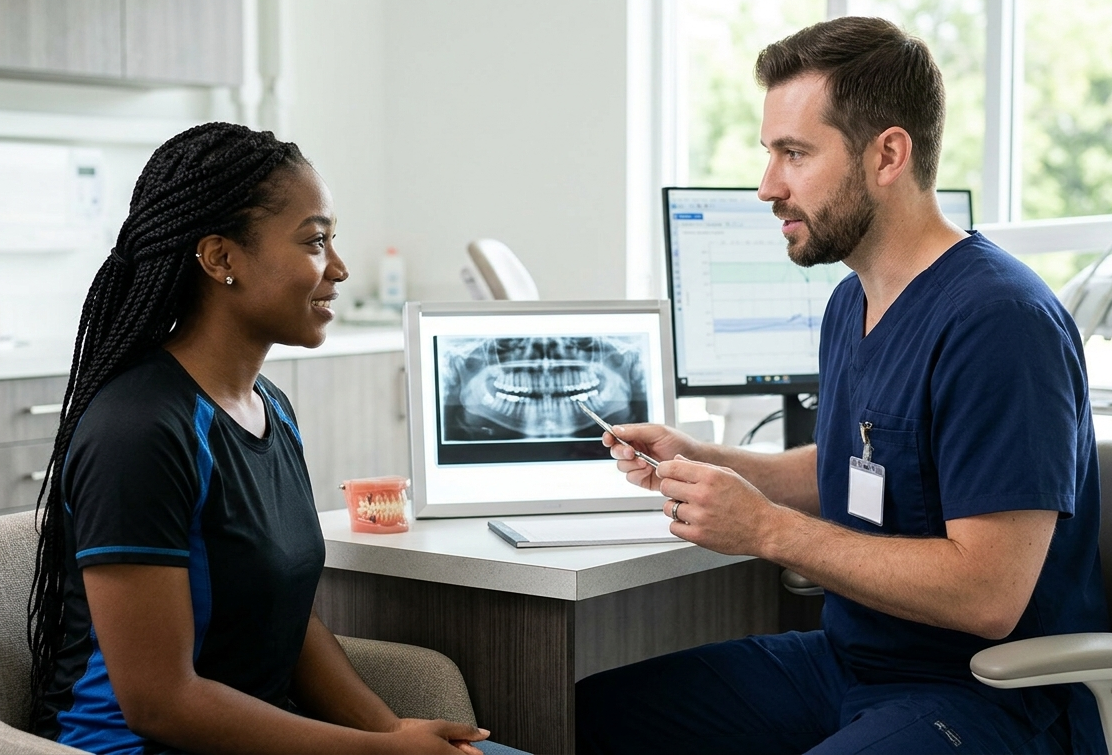
- X-rays or photos when needed to see what’s happening below the gumline.
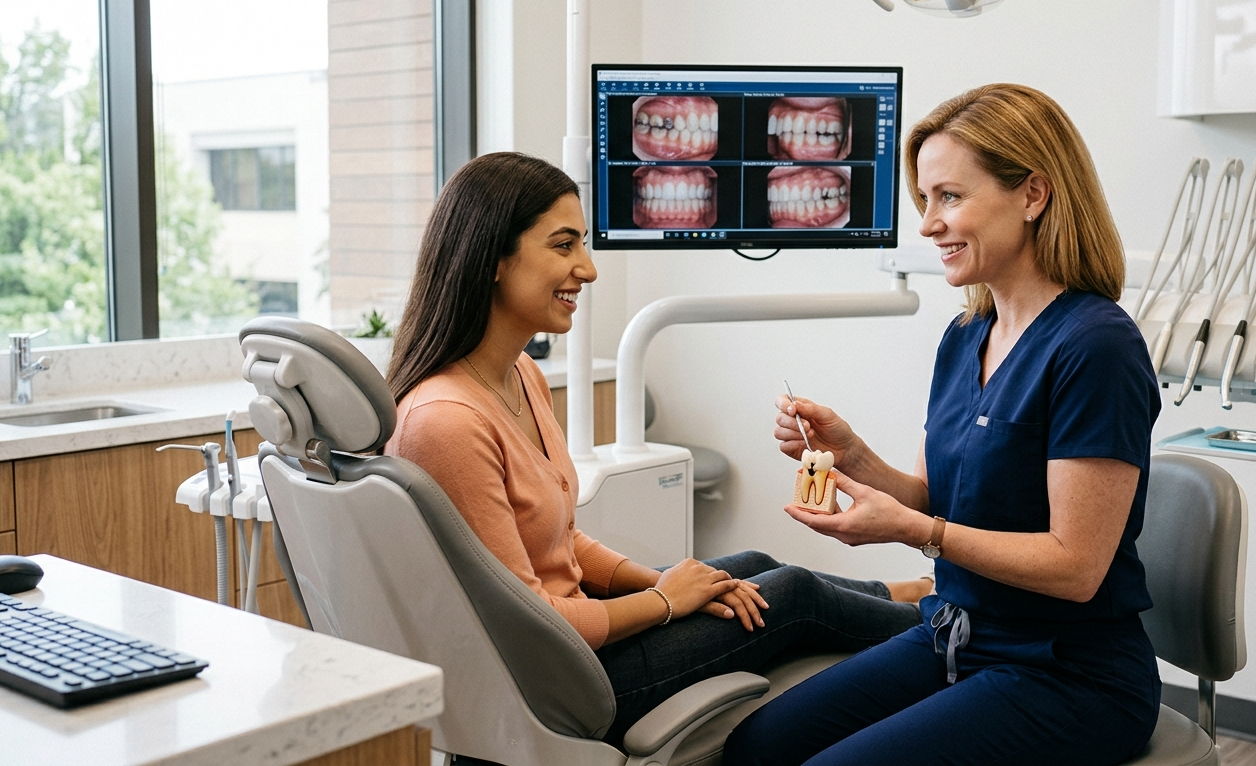
- A conversation about findings, including whether to monitor, treat now, or wait.
You should leave with a clear idea of what’s normal for your child’s age, what to watch for, and when to come back.
Treatment Options for Children and Teens
Options depend on a child’s age, growth, and the type of problem. Treatment may include orthodontic care such as braces, and older children and teens may also be good candidates for Invisalign clear aligners. The right choice comes down to what your child’s teeth need and what they can stay consistent with.
Keeping Teeth Healthy Along the Way
Orthodontic care works best alongside regular dental care. Braces and aligners change how teeth are cleaned, so children need steady brushing and flossing habits and routine check-ups. Anxious kids can also benefit from a gentle approach, and painless dental treatment options help visits feel more comfortable.
How Maple Dental Approaches Children’s Orthodontic Care
At Maple Dental, a child’s first orthodontic question usually starts in the same office where they get their regular care. As a dentist in Belleville, NJ that treats patients of all ages, the team can look at your child’s teeth and bite, explain what they see in plain language, and talk through next steps. Children’s care through kids and children’s dentistry is part of the same practice, so everything stays connected.
Cost often comes up early, too. Our team can walk you through payment options and insurance benefits, so you know what to expect before treatment begins.
Book a Closer Look at Your Child’s Smile
If something about your child’s teeth or bite has caught your attention, it’s worth having it checked. Schedule a consultation or call us at 973-528-3300, and we’ll evaluate your child’s smile and answer your questions. Families visit us from Belleville, Nutley,Kearny, and Newark.
Frequently Asked Questions
1. At what age should a child see an orthodontist?
The American Association of Orthodontists recommends a first check-up when a problem is first noticed, and no later than age 7. Some children benefit from an earlier look if a parent or dentist spots a concern.
2. Does an early check-up mean my child will need braces?
No. Many early visits end with a plan to monitor growth and no treatment at all. The goal is to catch problems early, not to start braces early.
3. Can a family dentist spot orthodontic problems?
Yes. Regular check-ups let a dentist track emerging teeth and jaw growth, and they can recommend an orthodontic evaluation when something looks off.
4. Is thumb sucking a reason for concern?
In toddlers, it’s common, and most children stop on their own. If the habit continues well beyond the early years, mention it at your child’s next visit, since it can affect tooth position.
5. Can a teenager still need braces if their baby teeth looked fine?
Yes. Some orthodontic problems only show up as permanent teeth come in, so it’s worth having a teen’s teeth and bite checked even if earlier visits were uneventful.